
The global IPTV market was USD 55.71 billion in 2025 and crosses USD 66.63 billion in 2026. This is not a niche tech story. The future of IPTV 2027 depends on three specific technologies. AI personalisation, edge computing infrastructure, and 8K delivery are fundamentally changing what IPTV is capable of. By 2027, viewers will notice the difference directly on the screens they already own.
The Market Numbers: Why IPTV Is Growing Faster Than Cable Ever Did
According to Mordor Intelligence in February 2026, the IPTV market is forecast to reach USD 137.22 billion by 2031 at a 15.55% CAGR. Global fiber lines surpassed 600 million by late 2025. This creates the exact bandwidth headroom that 4K and 8K streaming require. Simultaneously, 5G subscriptions hit 1.9 billion globally by mid-2025, covering roughly 55% of the world's population.
The display infrastructure is already waiting for the content. Manufacturers shipped 220 million smart TVs in 2025, and 85% natively support 4K and IPTV applications. By 2025, 68% of NTT fiber customers in Japan were watching 4K IPTV weekly. In the US alone, 10.3 million new homes were passed with fiber in 2024.
This establishes a clear pattern. The combination of fiber, 5G, and smart TV penetration drives structural market growth. IPTV is not displacing cable. It is replacing it permanently.
AI in Streaming: From Recommendations to Real-Time Intelligence
Three distinct AI layers operate within the modern streaming stack.
Layer 1: Content Discovery (Already Here)
Samsung launched its Vision AI Companion across the full 2026 TV lineup, including Micro RGB, OLED, and Neo QLED models. It integrates Bixby, Perplexity, and Microsoft Copilot directly on the television. The system suggests content based on time of day, viewing history, and local weather conditions.
This is multimodal AI processing voice commands, on-screen content analysis, and user behavior simultaneously. The NQ8 AI Gen3 processor uses 768 neural networks to analyze and optimize every frame. This is far beyond simple Netflix recommendations. The television builds a real-time model of what you want to watch next.
Layer 2: AI Upscaling (Already Here, Getting Better)
AI upscaling takes a 4K feed and renders it at near-8K quality on supported displays. The practical value is immediate. The 8K content library barely exists yet. AI upscaling bridges the gap between current broadcasts and next-generation displays without needing native 8K source material. Viewers buying 8K televisions in 2026 see the benefit immediately on existing streams.
Layer 3: AI-Generated Personalised Streams (Emerging)
Providers are transitioning AI-generated personalized content from prototype to pilot deployments in 2026. This includes custom highlight reels, localized commentary, and personalized interstitial graphics generated dynamically per viewer.
In practice, two viewers watch the identical Champions League match. One gets German commentary with tactical overlays. The other gets French commentary with fantasy points tracking. They watch the same core stream, but receive different experiences with zero extra production cost. Varodatic IPTV operates within this evolving infrastructure landscape, preparing for these dynamic delivery methods.
Edge Computing: The Technology That Actually Fixes Buffering
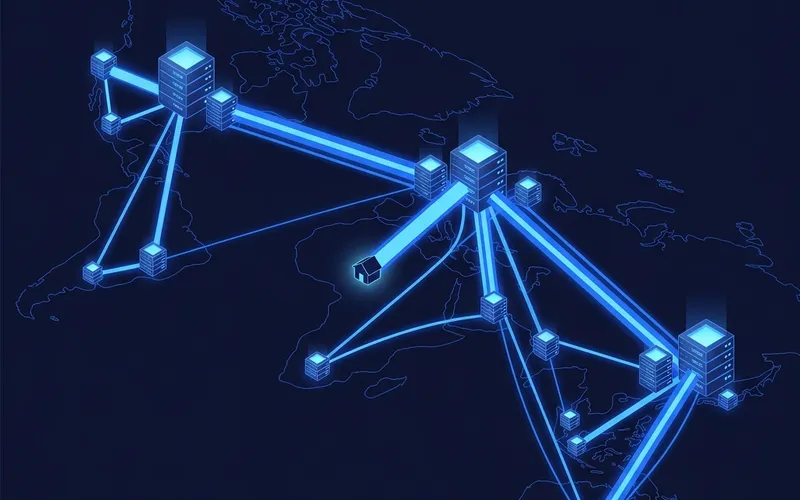
Traditional IPTV encodes video centrally and sends it thousands of miles. Every network hop adds latency, and peak load creates immediate congestion. Edge computing moves processing and caching physically close to the viewer. Instead of one central server in Amsterdam serving all of Europe, dozens of nodes handle local demand in Berlin, Paris, Madrid, and Warsaw.
Edge computing reduces IPTV stream latency by up to 70% compared to centralized delivery, according to Verizon's 2026 Edge Infrastructure Report. Akamai notes that edge-enabled platforms handle three times the concurrent viewer load during live events. Conviva's Q1 2026 streaming quality report shows 40% fewer buffering complaints on edge platforms.
Sub-200ms latency for live sports streaming is now achievable. This is down from 45 seconds on older centralized delivery models. Furthermore, 5G network slicing drops mobile IPTV latency under 10 milliseconds.
When a Champions League match is delivered via edge at sub-200ms, the viewer sees the goal before Twitter reacts. A Premier League match with 100,000 concurrent viewers no longer degrades because the load is distributed. Adaptive bitrate switching happens locally. The stream adjusts within milliseconds when a connection dips.
Edge nodes also enable geo-restriction compliance without central routing, targeted local ad insertion, and real-time interactive features like live polls and betting odds. If you want to know why live sport buffering still happens on older platforms, lack of edge infrastructure is the main culprit.
8K Streaming: Where It Actually Is in 2026

Native 8K streaming requires approximately 100 Mbps of sustained bandwidth. For context, 4K needs 25 Mbps, and HD requires just 8 Mbps.
The hardware exists. Samsung's flagship 2026 Micro RGB R95H supports 100% BT.2020 color coverage and costs SGD 12,999 for the 85-inch model. This is early adopter pricing. Some infrastructure providers are moving early. Saudi Arabia's STC used its 5-million-home fiber build to launch an 8K sports pack in 2024. In France, Orange gave new fiber customers 4K boxes at no surcharge to cut churn.
The 8K content gap is real and it matters. Native 8K content is practically nonexistent for consumer streaming. Cameras shoot 8K during production, but the files sit on drives rather than streaming platforms. Major sports broadcasters are running 8K pilots, not wide rollouts. The credible mainstream 8K streaming timeline is 2027-2028 at the earliest. Anyone saying otherwise is selling displays.
A 2026 8K TV with AI upscaling delivers genuine visual improvement over a 4K TV today. You do not wait for 8K content because the processor creates the effect. Next-generation compression, combining HEVC, MPEG-5 EVC, and AI video transcoding, will eventually reduce the 100 Mbps delivery requirement. First, hardware prices must fall. Then, we will see mainstream 8K IPTV sports packages emerge in select markets by 2027.
Spatial Computing: IPTV Beyond the Television Screen
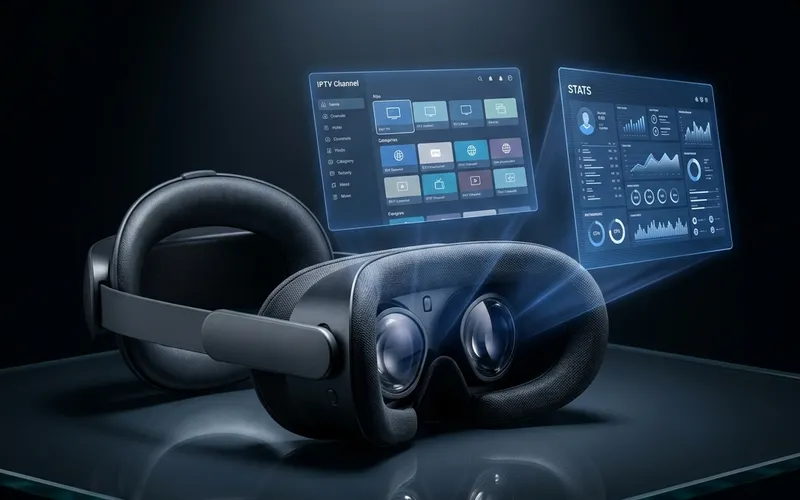
Apple Vision Pro supports IPTV apps and browser-based viewing right now. The VR cinema mode creates a virtual screen as large as the viewer wants, visible only to them. You can watch IPTV on one virtual screen while browsing stats on another simultaneously. This provides an excellent privacy use case for watching content in shared spaces without audio disturbance. The Meta Quest 3 offers a highly accessible alternative at USD 499, fully supporting IPTV app viewing in 2026.
Native visionOS IPTV apps are growing rapidly. Developers are establishing an early presence before the platform reaches massive scale. The expected Apple TV 4K Gen 4 features an A19 chip, Apple Intelligence support, and 40% faster WiFi 7. This acts as a staging point for Vision Pro content integration.
Behind the scenes, quantum-secure DRM is moving from research to early commercial deployment in 2026. NIST Post-Quantum Cryptography standards were finalized in August 2024. Quantum computers will eventually break the RSA and ECC encryption used in current DRM. Forward-thinking providers are already migrating their infrastructure to protect content delivery.
However, spatial computing is not a mass market yet. It will take three to five years. Full immersive sports broadcasting in VR features impressive demos, but it is not primetime programming today.
What Does Not Change By 2027
Live sports rights fragmentation will persist. Better technology does not consolidate broadcast rights. The NFL still requires multiple platforms, and NFL streaming fragmentation remains an issue. The Premier League is still split across different networks, mirroring the UK streaming fragmentation we see today. AI and edge computing do not solve licensing negotiations.
Content licensing costs rise faster than infrastructure savings every year. There is no sign of reversal. Furthermore, most viewers will not notice edge computing directly. They will simply notice fewer buffering events and faster channel changes without knowing why.
Headset sales are growing, but spatial computing is not replacing the living room television.
The fundamental value proposition of IPTV does not change. Viewers want one subscription, all channels, and access on any device. The underlying technology gets faster, smarter, and more resilient. The core offering stays exactly the same. Varodatic IPTV already operates on this infrastructure trajectory. We provide 4K HDR delivery and uptime infrastructure across 26,000 channels while the broader industry builds toward what comes next.
Frequently Asked Questions
Will IPTV replace cable TV completely by 2027?
IPTV is structurally replacing cable TV, not just displacing it. With global fiber lines passing 600 million and smart TV penetration accelerating, the underlying infrastructure makes traditional cable redundant.
What internet speed will I need for 8K IPTV streaming?
Native 8K streaming requires approximately 100 Mbps of sustained bandwidth. However, next-generation compression algorithms like HEVC and AI video transcoding will gradually reduce these requirements.
How does edge computing reduce IPTV buffering?
Edge computing moves processing nodes physically closer to the viewer. Instead of a single central server, localized nodes handle the traffic load, dropping latency and reducing buffering complaints by up to 40%.
Is 8K streaming available on IPTV in 2026?
Native 8K streaming content remains extremely limited in 2026. The primary benefit of an 8K display today is AI upscaling, which artificially enhances existing 4K streams to near-8K quality.
Can I watch IPTV on Apple Vision Pro?
Yes. Apple Vision Pro and Meta Quest 3 support browser-based viewing and native IPTV apps. Viewers can watch live streams on massive virtual screens alongside separate data displays.
What is quantum-secure DRM and why does IPTV need it?
Quantum-secure DRM protects streaming infrastructure from future quantum computers, which could break current RSA encryption. Providers are migrating to NIST Post-Quantum Cryptography standards to future-proof their content.
How does AI personalisation work in IPTV in 2026?
Modern AI streaming technology creates individualized models of viewing habits. It suggests content based on time of day, viewing history, and environmental factors using processors like Samsung's NQ8 AI Gen3.
The infrastructure underneath IPTV is getting significantly better, delivering faster speeds, smarter personalization, and higher resolution that viewers will see within 18 months. Varodatic IPTV is already delivering 4K HDR across 26,000 channels on the infrastructure that makes 2027's improvements possible today. You can check our current plans and channel lineup directly.
